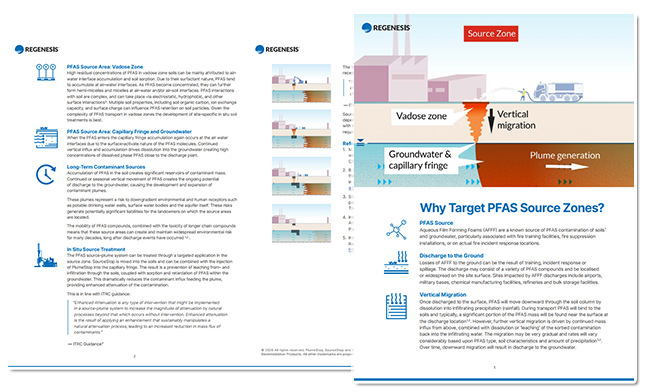
Highlights of this technical bulletin
- How AFFF releases create persistent PFAS source zones in soil and groundwater.
- The role of the vadose zone, capillary fringe, and groundwater in PFAS transport and plume development.
- Why accumulated PFAS mass can continue to leach and impact groundwater long after the original release event.
- How targeted in situ source treatment can reduce contaminant mass flux and support enhanced attenuation.
- Key considerations for reducing risk to downgradient receptors and accelerating progress toward site remediation goals.
PFAS contamination from aqueous film-forming foam (AFFF) releases can create long-term sources of groundwater impacts, particularly at airports, military installations, fire training facilities, refineries, and manufacturing sites. As PFAS migrates through the vadose zone and accumulates in soils, the capillary fringe, and groundwater, it can continue to feed contaminant plumes for decades. This technical bulletin explores the science behind PFAS source-zone behavior and explains why targeted source-area treatment can play a critical role in reducing plume growth, lowering risk to downgradient receptors, and supporting long-term remediation objectives.