- Targeted PFAS contaminants remediated to below detection limits at airport site
- Challenging environmental conditions overcome for a successful PFAS source zone treatment
- PlumeStop application has completely remediated the five individual PFAS targeted, reducing concentrations from 1,200 ng/L to non-detect
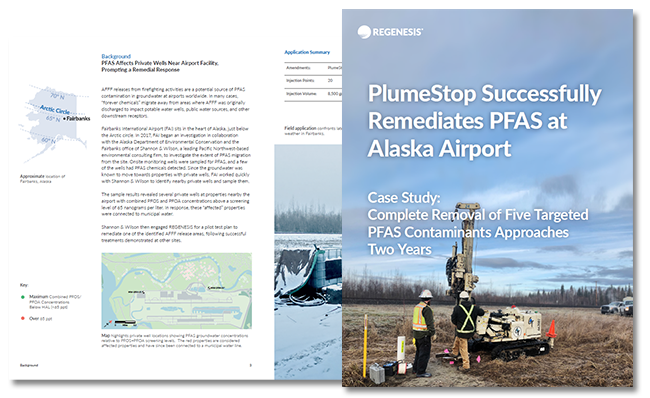
This case study reviews a site where PlumeStop® Colloidal Activated Carbon was applied to treat PFAS resulting from aqueous film-forming foam (AFFF) usage at an airport facility in Alaska. The application has reduced the five targeted PFAS below detection limits and applicable cleanup levels in a challenging hydrogeologic environment over a sampling period now approaching two years. In 2017, Fairbanks International Airport began an investigation in collaboration with the Alaska Department of Environmental Conservation and the Fairbanks office of Shannon & Wilson, a leading Pacific Northwest-based environmental consulting firm, to investigate the extent of PFAS migration from the site. Shannon & Wilson engaged REGENESIS for a pilot test plan to remediate one of the identified AFFF release areas, following successful treatments demonstrated at other sites.