Construction-integrated PFAS control – Seamlessly incorporated into earthwork activities, SourceStop-enabled treatment zones were installed concurrently with surcharging and fill placement, avoiding schedule disruptions or additional infrastructure.
Immediate migration risk reduction – Sorptive barriers intercepted both shallow groundwater flow and displaced pore water, actively capturing PFAS and preventing off-site transport during active construction.
Long-term passive performance – The system provides ongoing PFAS retention without pumps, power, maintenance, or waste handling—delivering decades of protection with minimal lifecycle costs.
Cost and operational efficiency – Eliminated the need for pump-and-treat systems, managing PFAS in place while reducing capital, operational, and waste disposal costs.
Sustainable, low-impact solution – In situ treatment avoided PFAS waste generation and minimized environmental footprint, aligning with development and regulatory goals.
Proven performance at scale – Over 2,000 linear feet of permeable treatment zones were installed across multiple pathways, demonstrating effective, scalable PFAS migration control for complex redevelopment sites
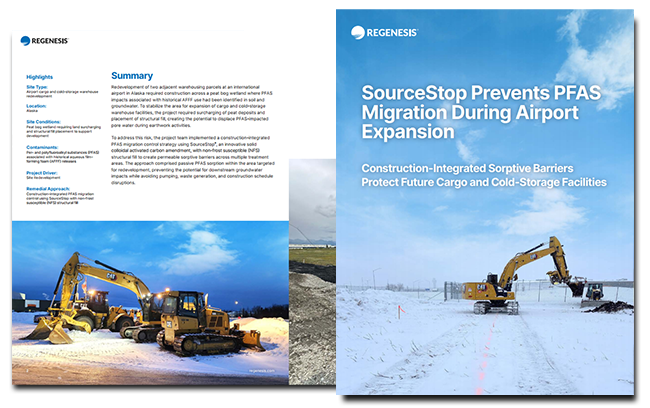
During a major airport expansion in Alaska, redevelopment plans encountered PFAS-impacted soils and groundwater within a sensitive peat bog environment—posing a significant risk of contaminant migration during construction. By integrating SourceStop® directly into structural fill, the project team deployed a passive, in situ treatment solution that controlled PFAS movement in real time, protected surrounding groundwater, and enabled construction to proceed without delays, waste generation, or added infrastructure.