
 Americas
 Europe
 Français
 Deutsch
 Italiano
 Español
PFAS Treatment Solutions
Sustainable remediation options for the entire PFAS source-plume system


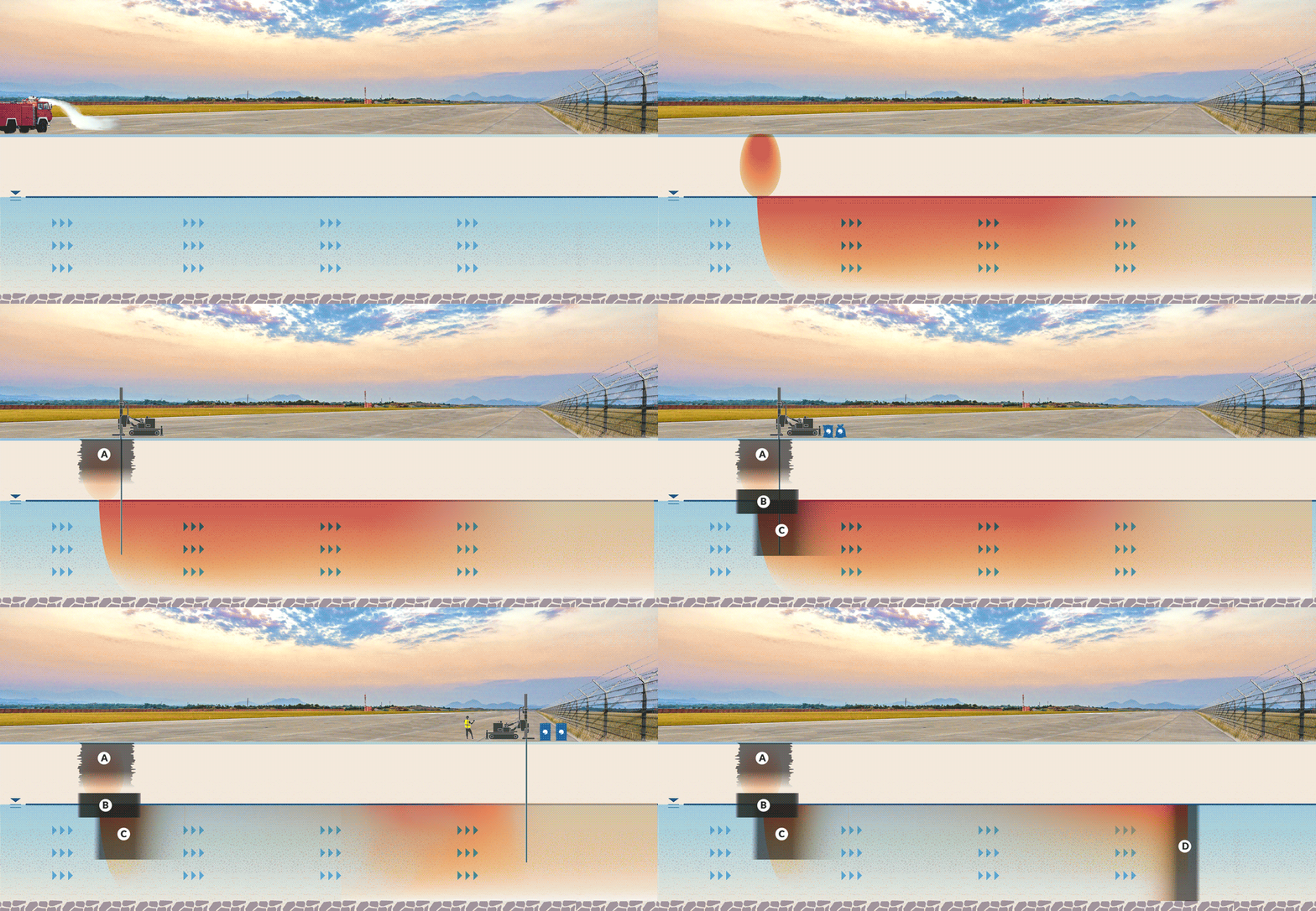
Targeted In-Situ Remediation
4 key areas of the PFAS source-plume system can be treated in combination or isolation, depending on your site needs. Click on the buttons below to find out more.

Soil:
Vadose Zone
– Reduce leachability of contamination in soil
– Prevent discharge to groundwater

Soil:
Capillary Fringe
– Adsorb contamination in the air-water interface
– Prevent discharge to groundwater

Groundwater:
Source
– Remove high PFAS levels from groundwater by adsorption
– Allow downgradient plume to attenuate

Groundwater:
Plume
– Remove mobile PFAS from groundwater by adsorption
– Prevent offsite migration and protect downgradient receptors
Resources



Sustainability
PFAS contamination is so widespread that a sustainable solution has be used to avoid remediation activities adding to atmospheric greenhouse gases. REGENESIS’ in situ solutions are the most sustainable approach for PFAS remediation. But don’t just take our word for it, we asked Ramboll to carry out a comprehensive sustainability study and the results speak for themselves.
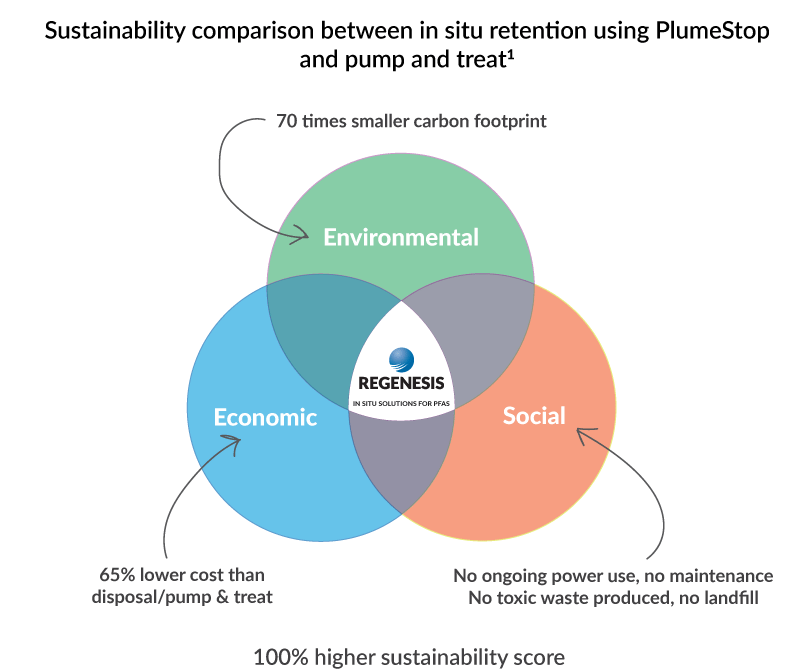
1 Sustainability of in situ and ex situ remediation of PFAS contaminated groundwater (02.05.2023); Ramboll (Circular Solutions and Climate Specialist team); using ‘cradle to grave’ carbon footprint analysis, full product-level Life Cycle Analysis, Life Cycle Cost Analysis and Sustainability assessment using Ramboll’s SURE model (Tier 2 assessment in line with ISO, ASTM standards and SuRF-UK guidance)
The Fallacy of Pump & Treat
Looking for a way to eliminate the risk of PFAS in soil and groundwater impacting your property? Pump and Treat is an expensive, energy intensive containment strategy which has rarely ever worked to completely flush the aquifer clean. PlumeStop is a proven approach that eliminates the risk of PFAS at 1/3 the cost of Pump and Treat while producing no waste at a 98% lower carbon footprint.
LONG LASTING
Decades of treatment with a single application
50% Lower Upfront Cost
Our applications can reduce upfront costs by 50%
90% Lower Treatment Cost
A typical application can reduce total costs by 90%
PFAS TREATMENT BENEFITS
Spill-location soils can discharge PFAS into the groundwater for decades. By using a blend of amendments and SourceStop™, further leaching of contamination is minimised, creating the enhanced attenuation of the downgradient plume below actionable levels.
While the plume is attenuating, offsite liability can be immediately removed and downgradient receptors protected through treatment of the groundwater using a PlumeStop® barrier. The PlumeStop barrier can be supplied with a warranty to guarantee performance.